
Your pool pump costs you $80-150 monthly to run. Pick the wrong size? That number doubles – or your pool turns green. Most pool owners choose pumps that are way too powerful, thinking bigger means cleaner. Wrong.
Here’s what we’ll cover to get your pump sizing right:
- How to calculate your pool’s volume in under 5 minutes
- The simple formula for finding your ideal flow rate
- Why oversized pumps actually damage your filter system
- Variable-speed vs single-speed pump breakdown
- Common sizing mistakes that cost hundreds yearly
- When to upgrade (and when to stick with what works)
We’ve helped hundreds of pool owners in Lehigh Acres find their perfect pump match. At Transparent Pool Service LLC, we use this exact process during our equipment installations – no guesswork, just math that saves you money.
Calculate Your Pool Volume Fast
You need three measurements. That’s it. Grab a tape measure and let’s knock this out.
- For rectangular pools: Length × Width × Average Depth × 7.5 = Gallons
Got a 20×40 pool that’s 5 feet deep? Here’s your math: 20 × 40 × 5 × 7.5 = 30,000 gallons
- For round pools: Diameter × Diameter × Average Depth × 5.9 = Gallons
- For oval pools: Length × Width × Average Depth × 5.9 = Gallons
Finding Average Depth (The Right Way)
Most pools slope. You can’t just measure the deep end and call it good. Add your shallow end depth to your deep end depth, then divide by two.
Example: 3 feet (shallow) + 8 feet (deep) = 11 feet ÷ 2 = 5.5 feet average
Pro tip:Measure depth at the water line, not the pool edge. That extra 6 inches matters when you’re sizing equipment.
Quick Reference Chart
| Pool Shape | Common Size | Approximate Gallons |
|---|---|---|
| Rectangle | 16×32 | 19,200 |
| Rectangle | 20×40 | 30,000 |
| Round | 24 ft | 17,000 |
| Round | 27 ft | 21,500 |
Write these numbers down. You’ll need them for every chemical calculation, equipment purchase, and service call. Speaking of service calls – if math isn’t your thing, we measure pools for free during our initial consultations at Transparent Pool Service LLC.
The Simple Formula for Finding Your Ideal Flow Rate
Once you know how many gallons your pool holds, the next step is figuring out your ideal flow rate. This is simply how fast your pump needs to push water to keep your pool sparkling clean. It’s often measured in gallons per minute (GPM) or gallons per hour (GPH).
A good rule of thumb is to turn over all the water in your pool at least once every 8 hours. We call this the “turnover rate.”
Here’s the simple formula to determine your ideal flow rate:
Pool Volume (Gallons)÷8 (hours)=Gallons Per Hour (GPH)
Then, to get GPM:
GPH÷60 (minutes)=Gallons Per Minute (GPM)
So, if you have a 24,000-gallon pool:
24,000 gallons÷8 hours=3,000 GPH
3,000 GPH÷60 minutes=50 GPM
This 50 GPM is your target minimum flow rate. However, you also need to consider your filtration system. Every filter has a maximum flow rate it can handle. Your pump’s flow rate must not exceed your filter’s recommended maximum. An oversized pump might move more water, but it could damage your filter or reduce its efficiency.
Factors That Change Flow
While the formula gives us a great starting point, other elements affect how much water your pump actually moves.
- Plumbing Size: The size plumbing you have directly impacts how easily water can flow. Smaller pipes create more resistance.
- Water Features: Extra water features, like a waterfall, a heater, or even a spa attached to your pool, add to the resistance. Your pump needs more pressure to push water through these.
- System Components: The type and condition of your filtration system, valves, and other equipment can also influence the actual flow rate your pump achieves.
This is where a variable speed pump really shines. Unlike single-speed pumps that run at one high setting, a variable speed pump can operate at a low speed for most of the day. This significantly improves energy efficiency. For example, running your pump at half the speed uses only one-eighth of the energy. Over time, this saves a remarkable amount of energy.
We can help you determine the right pump that provides optimal efficiency without wasting energy. Our goal is to ensure you have the right pump that delivers enough gallons of water to keep your pool spotless, without costing you an arm and a leg in monthly bills.
Why Oversized Pumps Actually Damage Your Filter System
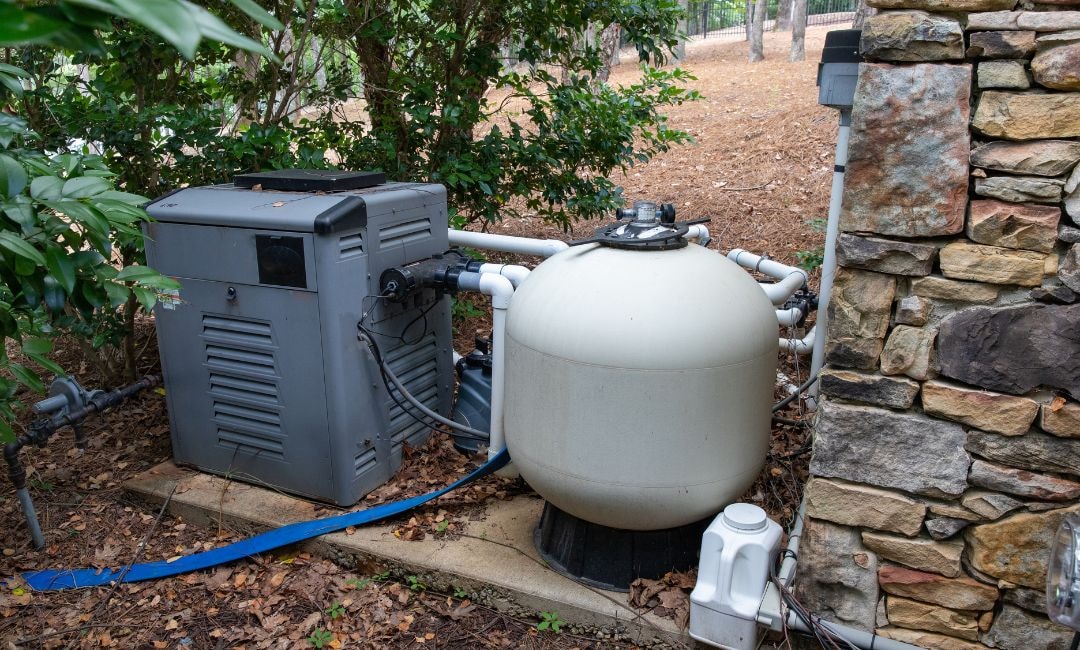
You might think a pump with more horsepower (HP) means a cleaner pool, but that’s a common mistake. A larger pump, often with higher HP, can actually do more harm than good to your filtration system.
Every pool filter, whether it’s a sand, cartridge, or DE filter, has a maximum flow rate it can handle. When an oversized pump tries to push more water through the filter than it’s designed for, you run into several issues:
- Filter Strain: The excessive pressure from a powerful motor can strain your filter grids or cartridges, leading to tears or premature wear. This means you’ll need to repair or replace parts more often.
- Plumbing Pressure: Imagine trying to force too much water through a small hose. The pressure builds, and eventually, something gives. Your skimmer and other parts of your plumbing system can experience this same strain, potentially causing cracks or leaks over time.
- Reduced Efficiency: Paradoxically, an oversized pump might not even filter more efficiently. It can push water too quickly for proper filtration, meaning some particles just sail right through your system.
The Right Pump for the Job
So, what’s the difference? It’s about matching the pump to your pool’s needs and your equipment’s ability. For most residential pools, a 1.5 HP to 2 HP pump is typically sufficient, assuming no major extra water features like a large waterfall or complex heating system. Brands like Hayward and Pentair offer a range of pumps, but getting the right pump size is key.
This is why a variable speed pump is so efficient. They have the power to handle demand when you need it, like for a waterfall, but can also run at a very low speed for daily filtration. This lower speed means less pressure on your system, less wear and tear, and a much quieter motor.
You save on electricity because the motor isn’t constantly running at max power. You won’t have to worry about replacing parts prematurely, and your salt system, if you have one, will also operate more efficiently. You adjust the speed to meet your pool’s specific needs, leading to a truly efficient system.
Variable-Speed vs. Single-Speed Pump Breakdown
Choosing between a variable-speed and a single-speed pump is a big decision for your pool’s efficiency and your wallet. For years, single-speed pumps were the only option. They run at one fixed speed, always at full power, consuming a lot of electricity.
Variable-speed pumps, on the other hand, are a newer, smarter choice. They let you adjust the motor’s speed, allowing it to run at a lower, more energy-efficient setting for routine filtration. This flexibility means significant savings on your energy bill and less wear on your pool equipment. It’s a clear step up for modern pool care.
Here’s a quick look at how they stack up:
| Feature | Single-Speed Pump | Variable-Speed Pump |
| Operation | Runs at one high speed constantly | Adjustable speeds for different tasks |
| Energy Use | High, consumes more electricity | Low, significantly reduces energy costs |
| Noise Level | Often loud | Very quiet, especially at lower speeds |
| Wear & Tear | More stress on equipment, shorter lifespan | Less stress, extends equipment life |
| Initial Cost | Lower | Higher |
| Long-Term Cost | Higher due to energy bills and replacements | Lower due to energy savings and durability |
| Control | On or Off | Programmable, often with smart features |
Common Sizing Mistakes That Cost Hundreds Yearly
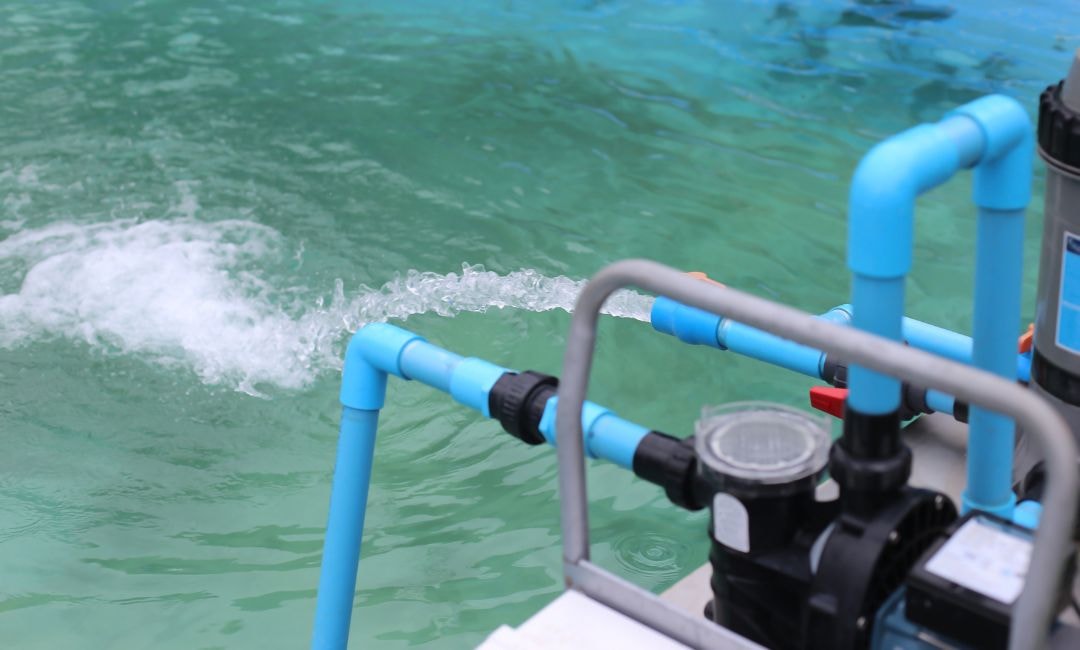
Getting the wrong pump size is a silent drain on your bank account. Many pool owners make common mistakes that lead to unnecessary spending, sometimes hundreds of dollars each year in wasted energy. We see it all the time.
Here are the big pitfalls:
- “Bigger is Better” Mentality: We touched on this, but it’s worth repeating. A pump that’s too powerful for your pool or filtration system forces too much water too quickly. This can damage your filter, put strain on your plumbing, and actually reduce filtering efficiency. It also guzzles electricity.
- Ignoring Head Pressure: This sounds technical, but it’s simple. Head pressure is the resistance your pump faces from your plumbing, filter, heater, and any water features. If you pick a pump without accounting for this, it might not push water effectively, or it might work too hard.
- Overlooking Variable Speed Benefits: Sticking with an old single-speed pump when a variable-speed option would be far more efficient is a huge miss. The initial cost might be higher, but the energy savings quickly pay for themselves. This is particularly true if your energy company offers rebates, which many do.
When to Upgrade (and When to Stick with What Works)
Deciding to upgrade your pool pump isn’t always clear-cut. Sometimes, your current setup just needs a little fine-tuning. Other times, a new pump is absolutely the right call.
You should consider an upgrade if:
- Your Energy Bills Are Sky-High: If your pool pump seems to be eating up your electricity budget, an older, inefficient single-speed model is likely the culprit. Upgrading to a variable-speed pump can slash those costs.
- Frequent Repairs: Is your pump constantly breaking down? Are you replacing motors or seals often? It might be nearing the end of its life, and throwing good money after bad isn’t smart.
- You Add New Features: If you’ve installed a new heating system, a waterfall, or other water features, your existing pump might not have the power or the right flow rate to handle the increased demand efficiently.
- It’s Loud: Older pumps can be incredibly noisy. A new, more efficient model, especially a variable-speed one, runs much quieter.
However, stick with what you have if:
- It’s Relatively New and Efficient: If your pump is less than five years old and you’re happy with your energy bills, there’s likely no pressing need to change.
- No Performance Issues: Your pool stays clear, your filter is working well, and you aren’t experiencing any unusual problems.
- Limited Budget: While a new pump saves money long-term, if your current budget is tight and your pump is still functional, you might hold off for now.
Ready to Get the Right Pool Pump with Transparent Pool Service LLC?
Choosing the right pool pump doesn’t have to be a headache. By understanding your pool’s volume and the factors that affect flow, you can pick a pump that keeps your water sparkling, saves energy, and avoids costly damage. Making an informed choice ensures your pool stays a source of joy, not stress.
Here are the key takeaways:
- Calculate your pool’s volume accurately.
- Match your pump’s flow rate to your filter’s capacity.
- Variable-speed pumps offer significant long-term savings.
- Avoid oversized pumps to protect your equipment.
At Transparent Pool Service LLC, we want you to enjoy your pool without a worry. We help Lehigh Acres homeowners like you determine the ideal pump size and offer expert installation, ensuring your pool system runs as efficiently and effectively as possible.
FAQs
Is a 1.5 HP pool pump enough?
For many residential pools, a 1.5 HP pool pump is often sufficient. It provides good flow for standard filtration and can handle common water features. However, factors like pool size, plumbing, and additional features might require a different size.
How many HP pumps do I need for a pool?
The horsepower you need depends on your pool’s volume, the total dynamic head (resistance from plumbing and equipment), and any water features. Rather than focusing solely on HP, look at the pump’s flow rate (GPM) and match it to your pool’s turnover needs and filter capacity.
Can I replace a 1 HP pool pump with 1.5 HP?
Yes, you can often replace a 1 HP pump with a 1.5 HP pump. However, you need to ensure your filtration system and plumbing can handle the increased flow. An oversized pump can cause efficiency issues or even damage your filter over time. Always check your filter’s maximum flow rate.
What size pool pump for 20,000 gallons?
For a 20,000-gallon pool, you’ll generally look for a pump that can achieve a flow rate of around 42 GPM (20,000 gallons / 8 hours / 60 minutes). This often translates to a 1 HP to 1.5 HP variable-speed pump for optimal energy efficiency and proper turnover.
What is the difference between 1.5 HP and 2 HP pool pump?
The main difference is the motor’s power and its ability to generate higher flow rates and overcome more resistance. A 2 HP pump can typically move more water faster than a 1.5 HP pump. While more powerful, a 2 HP suction pump also consumes more electricity if not managed by variable speed technology.